
-
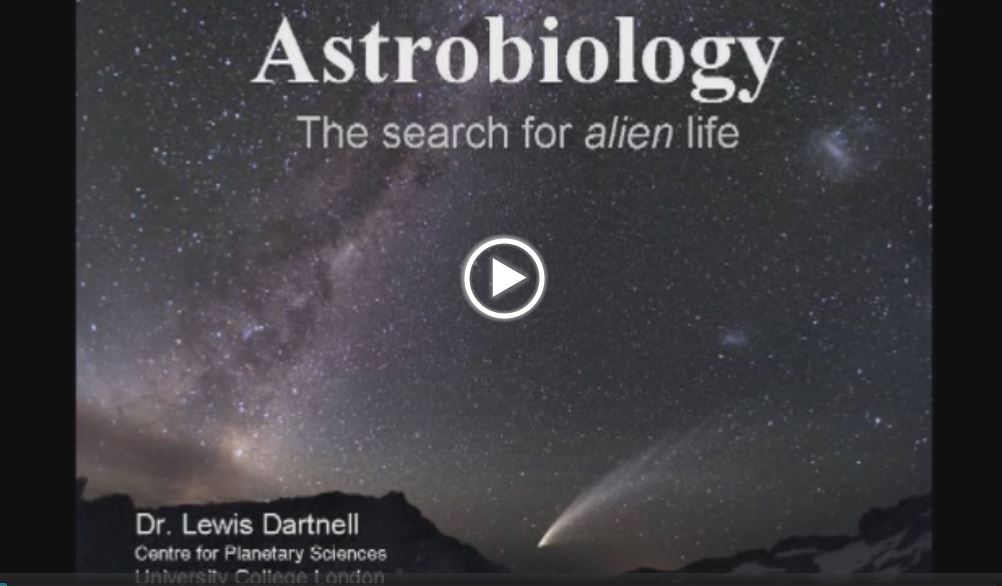
Astrobiology
-
Prof. Lewis Dartnell , 2025
Science and Society Lecture Week2
- Lectures
- English subtitles
- 44
Science and Society Lecture Week2


-
A la poursuite de pluton
-
Terri Randall , 2015
Le 19 janvier 2006, la Nasa mettait la touche finale à un projet colossal en faisant décoller une sonde chargée de fournir la première reconnaissance de Pluton et de ses satellites. Le voyage, prévu pour durer neuf ans, ne s'achèvera réellement qu'en 2030 : après Pluton, la sonde New Horizons doit encore explorer la ceinture de Kuiper, anneau de débris et d'astéroïdes qui délimite notre Système solaire...
- TV-Recordings
- No subtitles
- 55
Le 19 janvier 2006, la Nasa mettait la touche finale à un projet colossal en faisant décoller une sonde chargée de fournir la première reconnaissance de Pluton et de ses satellites. Le voyage, prévu pour durer neuf ans, ne s'achèvera réellement qu'en 2030 : après Pluton, la sonde New Horizons doit encore explorer la ceinture de Kuiper, anneau de débris et d'astéroïdes qui délimite notre Système solaire...

-
Gravité Zéro - Mission dans l'espace
-
Jürgen Hansen , 2015
In 2014, three young astronauts perform their first space mission aboard the International Space Station: the German Alexander Gerst, Russian Maksim Surayev and American Greg Wiseman. The crew shot fascinating 3D images that reveal both the space, Earth and the research that the trio carries on board. The effect is such that the viewer has the impression of floating in the cosmos.
- TV-Recordings
- No subtitles
- 44
In 2014, three young astronauts perform their first space mission aboard the International Space Station: the German Alexander Gerst, Russian Maksim Surayev and American Greg Wiseman. The crew shot fascinating 3D images that reveal both the space, Earth and the research that the trio carries on board. The effect is such that the viewer has the impression of floating in the cosmos.
The search for extra-terrestrial life has been going for 50 years - but there's been a recent breakthrough. Astronomers have discovered a new planet called Gliese 581 c. It is the most Earth-like planet ever found. It orbits a star and may have habitats capable of supporting life. NASA hopes to find 50 more Earth-like planets by the end of the decade, all of which increases the chance that alien life has begun elsewhere.
- TV-Recordings
- Astronomy
- Biology
- TV-Recordings
- English subtitles
- 50
The search for extra-terrestrial life has been going for 50 years - but there's been a recent breakthrough. Astronomers have discovered a new planet called Gliese 581 c. It is the most Earth-like planet ever found. It orbits a star and may have habitats capable of supporting life. NASA hopes to find 50 more Earth-like planets by the end of the decade, all of which increases the chance that alien life has begun elsewhere.
-
Horizon - How Small is the Universe?
-
Toby Macdonald
Horizon plunges down the biggest rabbit-hole in history in search of the smallest thing in the universe.
- TV-Recordings
- Physics
- English subtitles
- 60
Horizon plunges down the biggest rabbit-hole in history in search of the smallest thing in the universe.
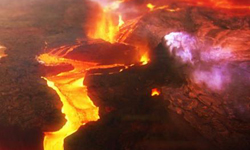
Volcanoes have long helped shape the Earth. But what is less well known is that there are volcanoes on other planets and moons that are even more extraordinary than those on our own home planet. Horizon follows an international team of volcanologists in Iceland as they draw fascinating parallels between the volcanoes on Earth and those elsewhere in the solar system.
- TV-Recordings
- English subtitles
- 60
Volcanoes have long helped shape the Earth. But what is less well known is that there are volcanoes on other planets and moons that are even more extraordinary than those on our own home planet. Horizon follows an international team of volcanologists in Iceland as they draw fascinating parallels between the volcanoes on Earth and those elsewhere in the solar system.
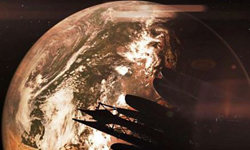
For decades, some have suspected that there might be others out there, intelligent beings capable of communicating with us, even visiting our world. It might sound like science fiction, but today scientists from across the globe are scouring the universe for signals from extraterrestrials.
- TV-Recordings
- English subtitles
- 60
For decades, some have suspected that there might be others out there, intelligent beings capable of communicating with us, even visiting our world. It might sound like science fiction, but today scientists from across the globe are scouring the universe for signals from extraterrestrials.
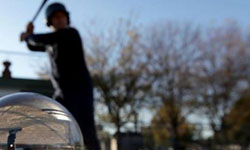
This is the story of how our solar system will be transformed by the aging sun before coming to a spectacular end in about eight billion years. Astronomers can peer into the far future to predict how it will happen by analysing distant galaxies, stars and even planets in their final moments.
- TV-Recordings
- English subtitles
- 60
This is the story of how our solar system will be transformed by the aging sun before coming to a spectacular end in about eight billion years. Astronomers can peer into the far future to predict how it will happen by analysing distant galaxies, stars and even planets in their final moments.
Horizon looks at dark energy - the mysterious force that is unexpectedly causing the universe's expansion to speed up.
- TV-Recordings
- English subtitles
- 60
Horizon looks at dark energy - the mysterious force that is unexpectedly causing the universe's expansion to speed up.
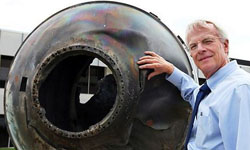
In 2014, the International Space Station had to move three times to avoid lethal chunks of space debris and there is an increasing problem of satellites mysteriously breaking down. With first-hand accounts from astronauts and experts, Horizon reveals the scale of the problem of space junk.
- TV-Recordings
- Engineering
- Environmental Studies
- English subtitles
- 59
In 2014, the International Space Station had to move three times to avoid lethal chunks of space debris and there is an increasing problem of satellites mysteriously breaking down. With first-hand accounts from astronauts and experts, Horizon reveals the scale of the problem of space junk.

-
How to see a Black Hole
-
Henry Fraser
Documentary following researchers as they try to take the first-ever picture of a black hole. They must travel the globe to build a revolutionary telescope that spans planet Earth.
- TV-Recordings
- English subtitles
- 59
Documentary following researchers as they try to take the first-ever picture of a black hole. They must travel the globe to build a revolutionary telescope that spans planet Earth.
-
Le grand défi sur Mars
-
Gail Willumsen , 2015
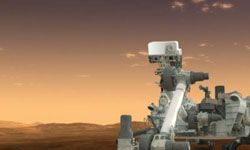
Dans le sillage du dernier robot envoyé sur Mars par la Nasa et des scientifiques qui l'ont mis au point, un état des lieux de nos connaissances sur la planète rouge.
- TV-Recordings
- No subtitles
- 50
Dans le sillage du dernier robot envoyé sur Mars par la Nasa et des scientifiques qui l'ont mis au point, un état des lieux de nos connaissances sur la planète rouge.
-
Mission Im All
-
Jurgen Hansen , 2014
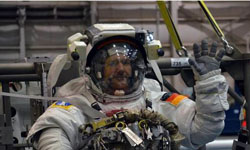
On 29 May 2014 ESA astronaut Alexander Gerst, NASA astronaut Reid Wiseman and Maxim Surajew took off from the Russian space agency Roskosmos for six months on the International Space Station. Still fascinated people of space exploration. What was the mission of the astronauts? And what about the life of an astronaut on the ISS really?
- TV-Recordings
- No subtitles
- 55
On 29 May 2014 ESA astronaut Alexander Gerst, NASA astronaut Reid Wiseman and Maxim Surajew took off from the Russian space agency Roskosmos for six months on the International Space Station. Still fascinated people of space exploration. What was the mission of the astronauts? And what about the life of an astronaut on the ISS really?

-
Misson Dans L'Espace
-
Jurgen Hansen , 2014
On 29 May 2014 ESA astronaut Alexander Gerst, NASA astronaut Reid Wiseman and Maxim Surajew took off from the Russian space agency Roskosmos for six months on the International Space Station. Still fascinated people of space exploration. What was the mission of the astronauts? And what about the life of an astronaut on the ISS really?
- TV-Recordings
- No subtitles
- 55
On 29 May 2014 ESA astronaut Alexander Gerst, NASA astronaut Reid Wiseman and Maxim Surajew took off from the Russian space agency Roskosmos for six months on the International Space Station. Still fascinated people of space exploration. What was the mission of the astronauts? And what about the life of an astronaut on the ISS really?

-
Royal Institution Christmas Lectures 2025
-
Dr Maggie Aderin-Pocock
Great scientists, even greater questions. Mind-expanding talks and hands-on science, inspiring children and adults alike since 1825.
- TV-Recordings
- English subtitles
- 177
Great scientists, even greater questions. Mind-expanding talks and hands-on science, inspiring children and adults alike since 1825.

-
Royal Institution Christmas Lectures 2025 - Episode 1 - Destination Moon
-
Dr Maggie Aderin-Pocock
Dr Maggie Aderin-Pocock begins her search for extraterrestrial life with an exploration of our nearest neighbour, and her favourite space rock, the moon.
- TV-Recordings
- English subtitles
- 59
Dr Maggie Aderin-Pocock begins her search for extraterrestrial life with an exploration of our nearest neighbour, and her favourite space rock, the moon.

-
Royal Institution Christmas Lectures 2025 - Episode 2 - Searching the Solar System
-
Dr Maggie Aderin-Pocock
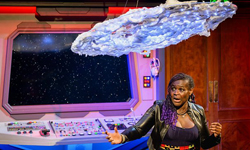
Space scientist Dame Dr Maggie Aderin-Pocock continues her search for alien life with a grand tour of our solar system. Could any other planets or moons out there be habitable?
- TV-Recordings
- English subtitles
- 59
Space scientist Dame Dr Maggie Aderin-Pocock continues her search for alien life with a grand tour of our solar system. Could any other planets or moons out there be habitable?
-
Royal Institution Christmas Lectures 2025 - Episode 3 - To the Stars and Beyond
-
Dr Maggie Aderin-Pocock
Dame Dr Maggie Aderin-Pocock, with the help of the world’s most powerful telescope, ventures through the Milky Way and into the universe beyond, on the hunt for alien worlds.
- TV-Recordings
- English subtitles
- 59
Dame Dr Maggie Aderin-Pocock, with the help of the world’s most powerful telescope, ventures through the Milky Way and into the universe beyond, on the hunt for alien worlds.
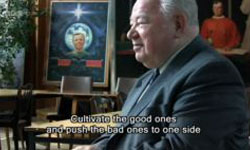
George Carey's film shows how the Russian space programme was kick-started by a mystic who taught that science would make us immortal, and carried forward by a scientist who believed that we should evolve into super-humans who could leave our overcrowded planet to colonise the universe. Stranger still, Carey shows how those ideas have survived Communism and adapted themselves to the science of the modern world.
- TV-Recordings
- Engineering
- Humanities
- TV-Recordings
- English subtitles
- 60
George Carey's film shows how the Russian space programme was kick-started by a mystic who taught that science would make us immortal, and carried forward by a scientist who believed that we should evolve into super-humans who could leave our overcrowded planet to colonise the universe. Stranger still, Carey shows how those ideas have survived Communism and adapted themselves to the science of the modern world.
-
Super Telescope: Mission to the Edge of the Universe
-
Martin Gorst
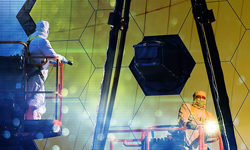
The inside story of the James Webb Space Telescope, following the Nasa team building the £8 billion device and the scientists taking its first image of distant stars and galaxies.
- TV-Recordings
- English subtitles
- 59
The inside story of the James Webb Space Telescope, following the Nasa team building the £8 billion device and the scientists taking its first image of distant stars and galaxies.